Guide
Native Australian ingredients: a guide to bush foods and how to try them
A guide to native Australian ingredients: wattleseed, finger lime, lemon myrtle, Davidson plum, Kakadu plum, quandong, mountain pepper, saltbush, macadamia and more, what they taste like, how they are used, and how to try them respectfully.
Published
Native Australian ingredients are the plants and animals that Aboriginal and Torres Strait Islander peoples have used as food and medicine for tens of thousands of years. The ones you are most likely to see on menus today include wattleseed (nutty and coffee-like), finger lime (citrus "caviar"), lemon myrtle (intense lemon leaf), Davidson plum (tart, deep purple), Kakadu plum, quandong, mountain pepper, saltbush and the macadamia.
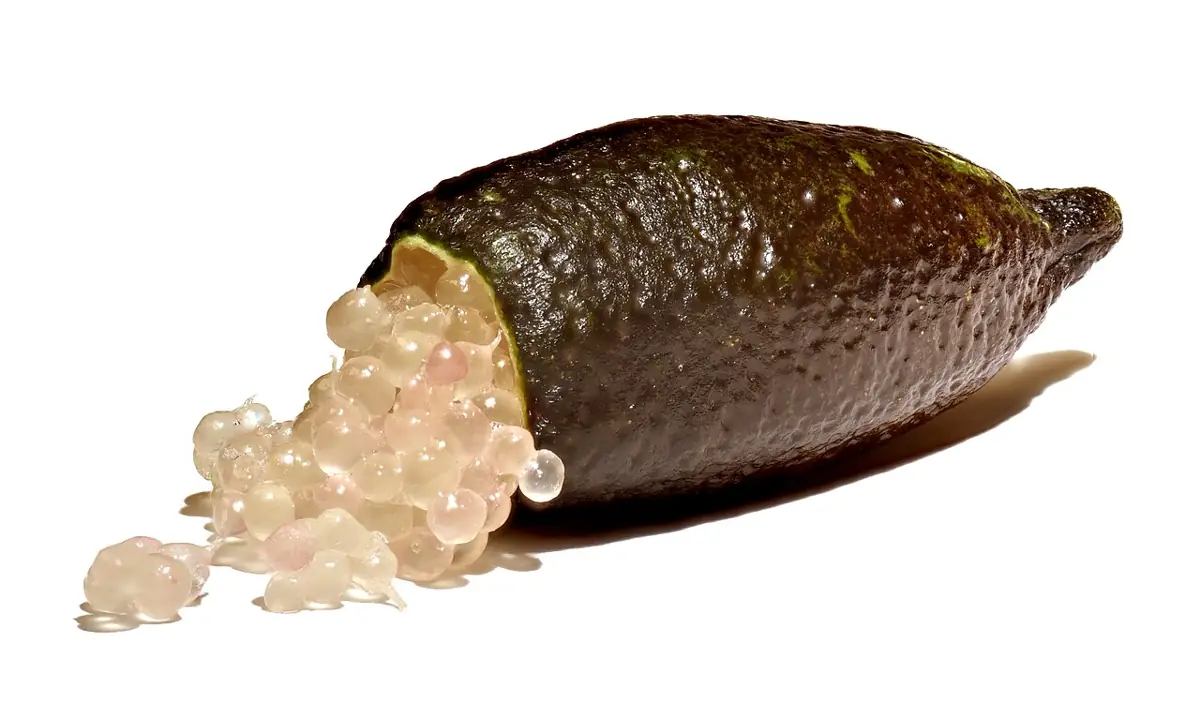
Photo: Citrus australasica - Australian finger lime.jpg by Amada44, CC BY-SA 3.0, via Wikimedia Commons.

This guide explains what each tastes like and how it is used. It is part of our Australian food guide. Information on species draws on Australian Native Food and Botanicals, the industry's peak body, and Tourism Australia.
Respect and provenance
These foods are part of living cultures. A few principles help you engage with them respectfully:
- Acknowledge the knowledge. The understanding of how to harvest, prepare and use these plants comes from Aboriginal and Torres Strait Islander peoples.
- Look for Indigenous-owned and Indigenous-partnered businesses when buying. ANFAB's stated purpose includes supporting ethical engagement with Traditional Owners.
- Do not forage without expert knowledge and permission. Some plants are toxic, many areas are protected, and harvesting can be culturally sensitive.
Fruits
Finger lime
A small, finger-shaped citrus from rainforests of the east coast. Cut it open and squeeze out tiny, juicy beads that pop with tangy flavour, which is why it is called "lime caviar". It is used on oysters and seafood, in cocktails, and in desserts.
Davidson plum
A deep purple, very tart fruit from rainforests of northern NSW and Queensland. It is usually cooked into jams, sauces, sorbets and glazes rather than eaten raw.
Kakadu plum
A small green fruit from northern Australia, traditionally valued by Aboriginal people for food and medicine. Tourism Australia notes it has been said to be one of the world's richest natural sources of vitamin C. You will usually find it as a powder or in jams, sauces and drinks.
Quandong
A bright red desert fruit with a tart, slightly earthy flavour, traditionally used fresh or dried. It is used in jams, pies and sauces.
Riberry
Small, pink-red berries with a clove-like spice note, used in jams, sauces and desserts.
Desert lime
A tiny, intensely flavoured citrus from inland Australia, used in marmalades, sauces and drinks.
Leaves and herbs
Lemon myrtle
A rainforest tree whose leaves have an intense lemon flavour and aroma, often described as "more lemony than lemon". It is one of the most widely used native ingredients, appearing in teas, biscuits, ice cream, marinades and drinks.
Anise myrtle
A leaf with a sweet aniseed or liquorice flavour, used in teas, desserts and with seafood.
Mountain pepper (Tasmanian pepperberry)
Both leaf and berry are used. The berry gives a hot, numbing spice that develops slowly; the leaf is milder. It is used with meat, in sauces and in cheese.
Saltbush
A hardy shrub from inland Australia with naturally salty leaves. It is used as a seasoning, fried as a garnish, or as a salt substitute.
River mint and sea parsley
Native herbs with fresh, mint and parsley-like flavours, used in salads, sauces and with seafood.
Seeds and nuts
Wattleseed
Seeds from certain Acacia species, roasted and ground. Tourism Australia notes Aboriginal communities traditionally ground the seeds into flour for damper. Today wattleseed adds nutty, coffee and chocolate notes to bread, biscuits, ice cream and pavlova.
Macadamia
Native to the subtropical rainforests of south-east Queensland and northern NSW, the macadamia is the best-known native Australian food crop. Enjoy it raw, roasted, in baking or as oil.
Bunya nut
The large nut of the bunya pine from south-east Queensland, which has deep cultural significance. It is boiled or roasted, with a chestnut-like texture.
Proteins
Kangaroo is sold in supermarkets and on menus as lean red meat. Emu and crocodile appear on some menus, mainly in tourist areas. Native seafood, such as barramundi, Moreton Bay bugs and native oysters, is covered in our seafood guide.
Quick flavour guide
| Ingredient | Flavour | Typical use |
|---|---|---|
| Finger lime | Tangy citrus beads | Seafood, drinks, desserts |
| Lemon myrtle | Intense lemon | Tea, biscuits, marinades |
| Wattleseed | Nutty, coffee, chocolate | Bread, ice cream, baking |
| Davidson plum | Very tart, fruity | Jam, sauces, sorbet |
| Kakadu plum | Tart, fruity | Powders, jams, drinks |
| Quandong | Tart, earthy | Jams, pies, sauces |
| Mountain pepper | Hot, slow-building spice | Meat, sauces, cheese |
| Saltbush | Salty, herbal | Seasoning, garnish |
How to try native ingredients
- Restaurants: look for menus that name native ingredients; our modern Australian guide explains the style.
- Markets: specialist stallholders sell spices, jams and fresh fruit in season. See our markets guide.
- Tours and classes: some Aboriginal-guided tours and cooking classes introduce bush foods. Our food tours page explains the options.
- At home: start with lemon myrtle in tea or baking, wattleseed in biscuits, or finger lime on seafood.
Allergies and safety
Native ingredients can cause allergic reactions like any food. Macadamia and other tree nuts are common allergens. Buy from reputable suppliers, follow labels, and check with your doctor if you have allergies.
Where to go next
Frequently asked questions
What are native Australian ingredients?
They are plants and animals native to Australia that have been used as food by Aboriginal and Torres Strait Islander peoples for tens of thousands of years, such as wattleseed, finger lime, lemon myrtle, Kakadu plum, quandong and macadamia.
What does finger lime taste like?
Finger lime contains small, caviar-like beads of tangy citrus pulp that burst when you bite them. It is often used on seafood, in drinks and in desserts.
Is it safe to forage for bush foods?
Do not forage unless you have expert knowledge and permission. Some native plants are toxic, many areas are protected, and harvesting can be culturally sensitive. Buy from reputable suppliers instead.
Where can I buy native ingredients?
Native ingredients are available from specialist suppliers, some farmers markets, delis and online. Look for businesses that work with or are owned by Aboriginal and Torres Strait Islander people.
Is macadamia native to Australia?
Yes. Macadamia trees are native to the subtropical rainforests of south-east Queensland and northern New South Wales, and macadamias are the best-known native Australian food crop.