Guide
The Australian barbecue guide: public BBQs, sausage sizzles and food safety
Everything about the Australian barbecue: what goes on the grill, using free public barbecues in parks, etiquette, the sausage sizzle and democracy sausage, seafood on the barbie, food safety temperatures, and fire bans.
Published
The Australian barbecue is an informal gathering built around grilling outdoors: sausages, steaks, lamb chops, chicken, burgers, seafood and vegetables, cooked on a backyard barbecue or a free public barbecue in a park, and eaten with salads and bread. The sausage sizzle, a sausage in a slice of bread with onions and sauce, is the community version. Cook meat right through, keep food cold until it goes on the grill, and always check fire restrictions before you light up.
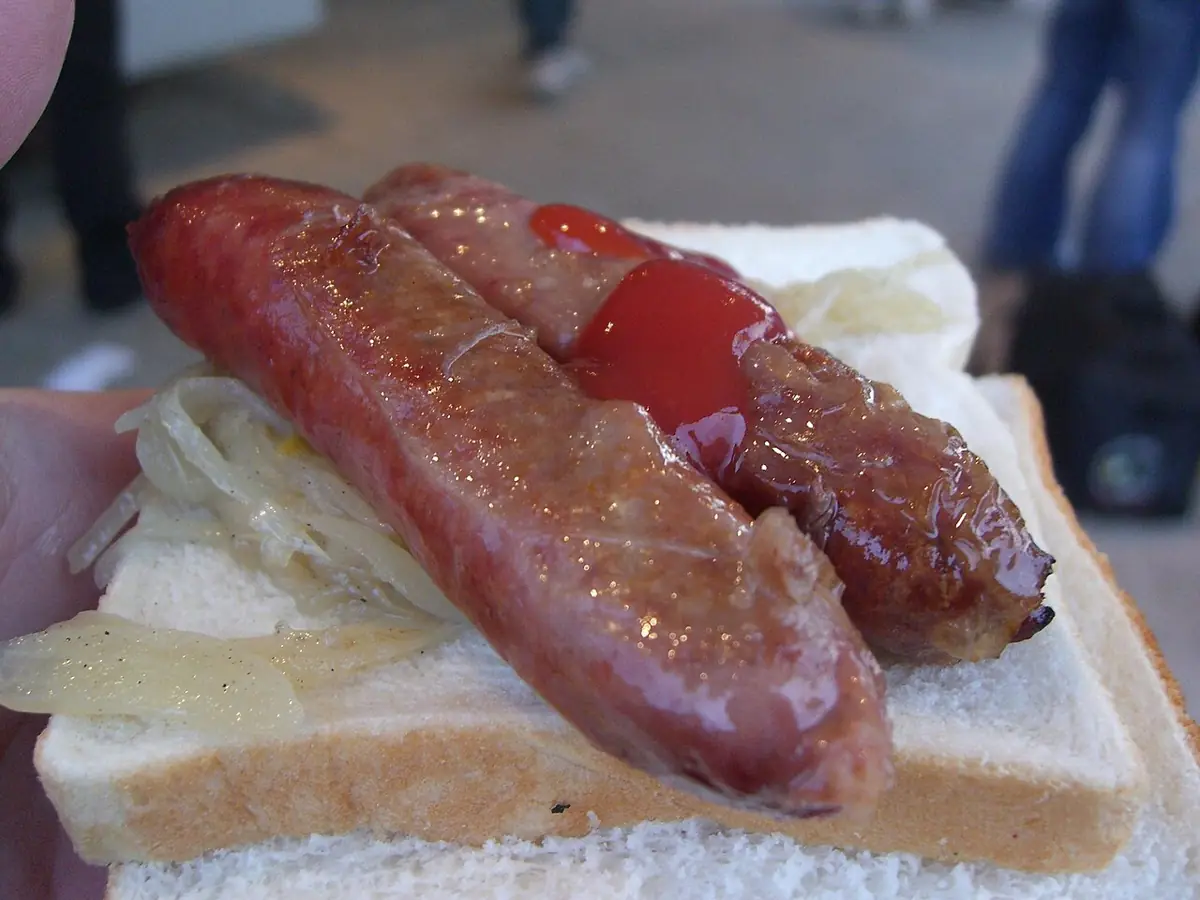
Photo: Sausage Sizzle - Snowy Valley Resort AUD3.50.jpg by Alpha, CC BY-SA 2.0, via Wikimedia Commons.

This guide covers the food, etiquette and safety. It is part of our Australian food guide. Food safety advice draws on the Food Safety Information Council and FSANZ.
What goes on the barbie
There is no single menu, but common items include:
- Sausages ("snags"): the essential barbecue item
- Lamb chops and cutlets
- Steak, often rump, sirloin or scotch fillet
- Chicken: marinated thighs, wings or skewers
- Burgers and rissoles
- Seafood: prawns, fish fillets, octopus and Moreton Bay bugs. See our seafood guide.
- Vegetables and halloumi: corn, capsicum, mushrooms, zucchini, haloumi
- Kangaroo: lean, best cooked rare to medium
Sides usually include salads (potato, coleslaw, green), bread rolls and sauces. Dessert might be pavlova or fruit. See our guide to Australian foods to try.
Public barbecues
Many local councils install free electric or gas barbecues in parks, beachside reserves and picnic areas. They are a great option for visitors.
Tips:
- Arrive early on weekends and public holidays, when barbecues are in demand.
- Bring tongs, a scraper, paper towel, a sheet of foil or baking paper, plates, a bin bag and hand sanitiser.
- Check the barbecue is clean and working before you start.
- Share. If others are waiting, do not monopolise the barbecue.
- Clean up. Scrape the plate and wipe it down when you finish, and take your rubbish with you.
Barbecue etiquette at someone's home
- "Bring a plate" means bring a dish to share, not an empty plate.
- BYO drinks is common; ask the host.
- The cook usually runs the barbecue. Offer to help, but do not take over the tongs uninvited.
- Say thanks and offer to help clean up.
The sausage sizzle and democracy sausage
Community groups, schools and sports clubs raise money with sausage sizzles outside hardware stores, at sports grounds and at events. On election day, stalls at polling places sell the "democracy sausage", now a much-loved tradition. Typical options: sausage in bread, with onions, tomato sauce or mustard; vegetarian sausages are increasingly common.
Food safety
Barbecues often happen on hot days, when bacteria multiply quickly. Food safety bodies such as the Food Safety Information Council recommend:
- Keep cold food cold (in a fridge or an esky with ice packs) until it goes on the grill.
- Keep raw and cooked food separate, with separate plates and utensils.
- Cook sausages, mince, burgers and poultry right through, with no pink in the middle and juices running clear. A meat thermometer is the most reliable check.
- Do not leave food out in the heat. Refrigerate leftovers promptly, or throw them out.
- Wash hands before handling food, especially after touching raw meat.
If you are cooking for vulnerable people, such as pregnant women, young children, older people or people with weakened immune systems, take extra care.
Fire restrictions
Bushfire risk is real in Australia, especially in summer. Each state's fire service, such as the NSW Rural Fire Service, declares fire danger ratings and total fire ban days.
- On total fire ban days, open fires are banned and barbecue use is restricted or prohibited, depending on the state, type of barbecue and location.
- Check before you cook, especially in parks, campgrounds and rural areas.
- Never leave a barbecue unattended, and keep water nearby.
Seafood on the barbecue
Australians love barbecued seafood, especially in summer and at Christmas. Prawns, fish fillets, scallops and octopus cook quickly. Use a hot plate and do not overcook. See our seafood coasts at a glance.
Vegetarian and vegan barbecues
Grilled vegetables, corn, haloumi, mushrooms, tofu and plant-based sausages work well. Use a clean section of the hotplate, or foil, to avoid contact with meat. See our vegetarian guide.
Barbecue checklist
| Item | Why |
|---|---|
| Esky and ice packs | Keep food cold |
| Separate plates and tongs | Avoid cross-contamination |
| Meat thermometer | Check food is cooked |
| Foil or baking paper | Clean surface on public barbecues |
| Bin bags and paper towel | Leave the barbecue clean |
| Water | Drinking and fire safety |
| Sunscreen and hat | Australian sun |
Where to go next
Frequently asked questions
Are public barbecues free in Australia?
Many councils provide free electric or gas barbecues in parks, beaches and picnic areas. Some charge a small fee. Check the local council's website.
What is a democracy sausage?
It is the nickname for a sausage in bread bought from a community fundraising stall at a polling place on election day. It has become an Australian election tradition.
Can I have a barbecue on a total fire ban day?
Rules differ by state. On total fire ban days, open fires are banned and the use of barbecues is restricted or prohibited depending on the type and location. Check your state fire service before cooking.
How do I know sausages are cooked?
Food safety bodies recommend cooking sausages, mince and poultry right through, with no pink in the middle and clear juices. A meat thermometer is the most reliable check.
What should I bring to an Australian barbecue?
If you are a guest, ask the host, but bringing a drink, a salad or dessert, or some meat for the grill is common. 'Bring a plate' means bring a dish to share.