Guide
Dining out etiquette in Australia: tipping, BYO, surcharges and bookings
How eating out works in Australia: whether to tip, BYO and corkage, weekend and public holiday surcharges, card surcharges, ordering at the counter or by QR code, free tap water, bookings, splitting the bill, dress codes, children and dietary requests.
Published
Dining out in Australia is relaxed. Tipping is not expected (hospitality workers are paid award wages), tap water is usually free, BYO wine is allowed at some restaurants, sometimes with a corkage fee, and some cafés add a weekend or public holiday surcharge, which must be shown on the menu. Many cafés and pubs use counter or QR-code ordering. Book popular restaurants ahead, especially on Friday and Saturday nights.
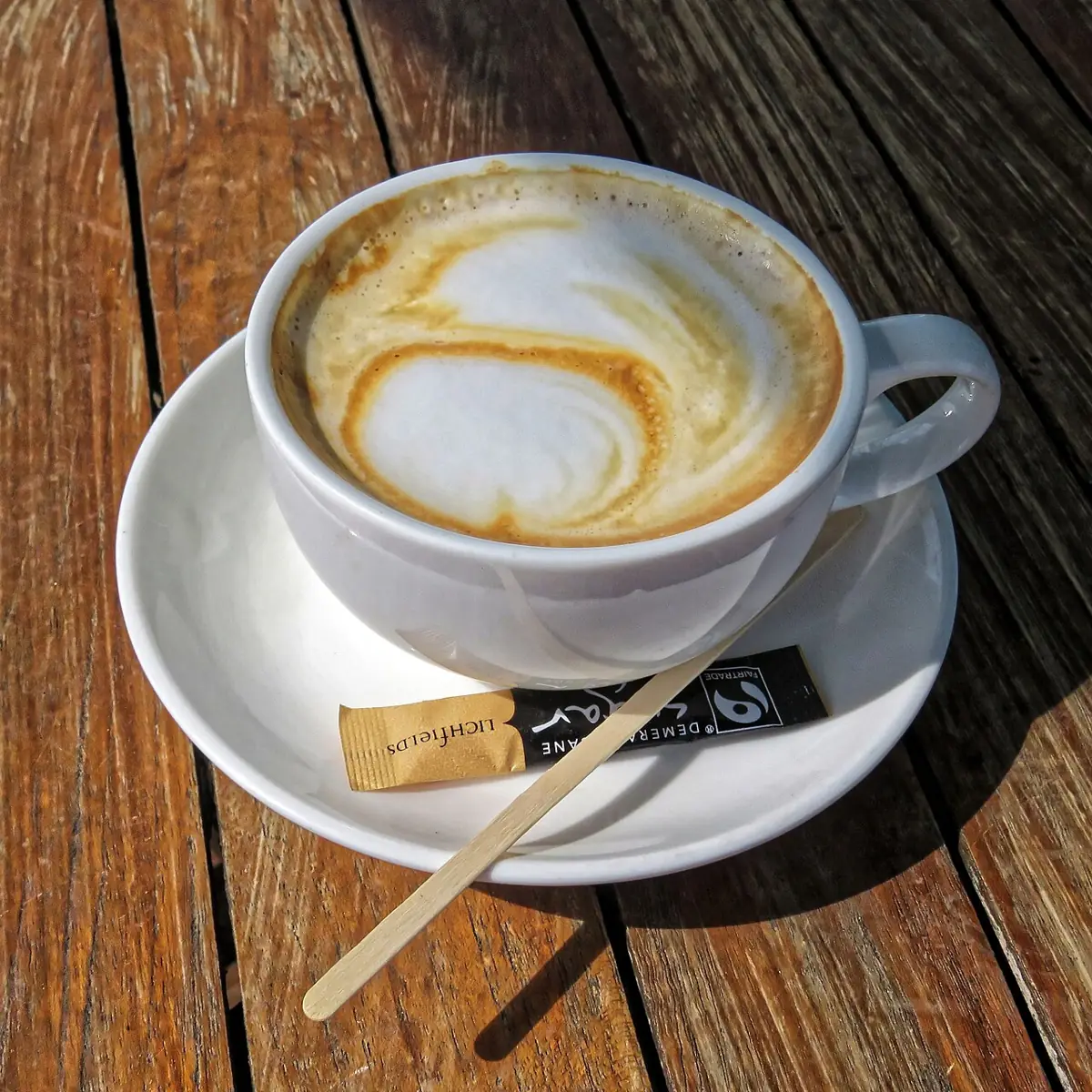
Photo: Flat white coffee Highgate Cricket Club, Crouch End, London 01.jpg by Acabashi, CC BY-SA 4.0, via Wikimedia Commons.

This guide explains each custom in more detail. It is part of our Australian food guide. Rules on surcharges come from ACCC guidance; policies at individual venues vary, so check with them.
Tipping
Tipping is not part of Australian culture in the way it is in some countries. Hospitality workers are paid under Australian awards, and menu prices include GST.
- Cafés and casual eateries: tipping is uncommon. Some have a tip jar.
- Sit-down restaurants: some diners tip for excellent service, especially in fine dining, but it is optional. There is no standard percentage.
- Card terminals: some terminals prompt for a tip. You can choose "no tip".
- Large groups: check the menu or booking terms; some restaurants add a service charge for large groups, which should be disclosed.
BYO and corkage
BYO means "bring your own", usually wine. It is more common at casual restaurants, especially some Asian and Italian restaurants.
- Check first. Not every restaurant is BYO, and some are BYO wine only.
- Corkage is a fee for opening and serving your wine, charged per bottle or per person.
- Licensed restaurants may allow BYO on certain nights only.
Surcharges
Weekend and public holiday surcharges
Some cafés and restaurants charge a surcharge on weekends or public holidays, usually to cover higher wage costs. According to the ACCC, they do not have to include the surcharge in each menu price, but the menu must include the words "A surcharge of [percentage] applies on [day or days]", displayed at least as prominently as the most prominent price. If a surcharge applies every day, it must be included in the displayed price.
Card surcharges
Rules on card payment surcharges have been changing. The ACCC's card surcharges page explains the current position. If in doubt, ask before you pay.
Ordering and paying
- Counter ordering: many cafés, pubs and casual eateries ask you to order and pay at the counter, then bring food to your table. Note your table number.
- QR-code ordering: some venues use QR codes at the table to order and pay on your phone.
- Table service: at restaurants, staff take your order and you usually pay at the end, at the counter or table.
- Splitting the bill: most venues will split bills, but some prefer one bill for large groups. Ask before you order.
Water and drinks
Tap water is safe to drink in Australian cities and is usually provided free on request. Bottled water is charged. Drinking ages and responsible service of alcohol laws apply; venues may ask for ID.
Bookings
- Book popular restaurants ahead, especially for Friday and Saturday nights and public holidays.
- Many casual places do not take bookings. Arrive early or expect a wait.
- Deposits and cancellation fees are increasingly common at popular restaurants, especially for groups. Read the terms.
- Let the restaurant know if you are running late or need to cancel.
Dress codes
Most restaurants and cafés are casual. Fine-dining restaurants and some bars expect smart casual; some pubs and clubs do not allow thongs (flip-flops) or singlets in the evening. Check the venue's website.
Children
Australian cafés and many restaurants are family-friendly, with high chairs and kids' menus. Some fine-dining restaurants and bars are not suitable for children. Licensed venues have rules about minors in bar areas.
Dietary requirements and allergies
Tell staff about allergies and dietary requirements when you book and again when you order. Packaged food must declare certain allergens, as explained by FSANZ, but for meals prepared in a restaurant you rely on staff, so ask clearly. See our gluten-free and vegetarian guides.
Quick reference
| Situation | What to do |
|---|---|
| Great service at dinner | Tip if you wish; not expected |
| Café with a Sunday surcharge | Look for the notice on the menu |
| BYO restaurant | Bring wine; expect corkage |
| Busy café | Order at the counter; note your table number |
| Group of eight or more | Check for set menus, deposits or service charges |
| Allergy | Tell staff when booking and ordering |
Where to go next
Frequently asked questions
How much should I tip in Australia?
Tipping is not expected. If you choose to tip for excellent service at a sit-down restaurant, there is no fixed amount; many people round up or leave a modest tip. Never feel obliged.
Is a weekend surcharge legal in Australia?
Yes. Restaurants and cafés can charge a weekend or public holiday surcharge, but the ACCC says the menu must state 'A surcharge of [percentage] applies on [day or days]' at least as prominently as the most prominent price.
What is corkage?
Corkage is a fee some BYO restaurants charge for opening and serving wine you bring. It may be charged per bottle or per person. Check the policy when you book.
Is tap water free in Australian restaurants?
In most restaurants and cafés, tap water is provided free on request, often in a carafe or self-serve. Bottled water is charged.
Do I need to book restaurants in Australia?
Popular restaurants, especially on Friday and Saturday nights, should be booked ahead. Many casual cafés and eateries do not take bookings and work on a walk-in basis.